Understanding Complexity Can Make Life and Work Less Complicated
Sometimes you can do everything right, balance theory and practice, experiment, adapt, and still fail. In complex systems, progress is rarely the result of control, instead it's the result of learning and self-awareness.
Introduction
You're sitting in a meeting, listening to a cool new initiative someone’s clearly designed without leaving their desk. The assumptions are simple, the constraints are hard, and edge cases barely register. You already know how this ends. Three to six months in, the enthusiasm fizzles and what's left behind is confusion, wasted effort, and quiet damage to the product or the organisation. A post-hoc narrative may even declare the initiative a success. The P&L might beg to differ.
This isn't a rare event. When the initiative fails, someone usually asks how it is possible that careful planning produced this. A retrospective follows. But the theory that explains why outcomes emerge rather than follow plans isn't intuitive, and most managers haven't met it. The same logic plays out in politics, in education reforms, in healthcare overhauls, even in how we judge our own lives. Linear, wishful thinking leads to brittle decisions across all of them. The gap is unaddressed because most people don't know where to start. So let's start with systems.
Thinking in Systems
At the start of the 20th century, science ran on analysis. The dominant belief was that if you could take something apart and understand its smallest components, you could understand the thing itself. Physics and chemistry had earned the confidence. Reducing matter into atoms, then into subatomic particles, revealed the underlying structure of the universe. Quantum theory and the modern scientific worldview followed. The closer science looked, the more precise its models became.
But precision didn't help us understand life. Knowing everything about carbon, hydrogen, and calcium doesn't explain how an organism behaves. We can analyse a chicken down to its cells and proteins and learn a great deal about its building blocks. None of it tells us why it behaves as a chicken. The whole does something the parts don't reveal.
Ludwig von Bertalanffy proposed General Systems Theory to address exactly this. Working through the 1930s and 1940s, and publishing his major synthesis in 1968, he argued that living phenomena can't be understood by analysing components in isolation. They have to be studied as wholes, because their defining characteristics arise from relations and interactions, not from isolated elements. A system, in his definition, is a set of elements standing in interrelations that give rise to new properties not present in the parts.
What is a system in practical terms? Different formal definitions exist, but they share a core. A system is an arrangement of elements that, together, display behaviour the elements can't display individually. It sits in an environment, has boundaries, contains interactions, and expresses purpose. Systems also nest inside larger systems, the way organs form organisms and organisms form ecosystems.
The simplest description is, a system is a group of elements connected by a logic. A toolbox isn't a system. You can put anything into it and its identity doesn't change. Whether it holds screws, pliers, or random objects, it remains a container. Now consider a car. Its components are arranged in a specific configuration. Remove one piece or replace it with something random and the system stops working. Its nature lies not in the parts but in the relationships among them.
Not All Systems Are Equal
Once you start seeing the world through systems, it becomes obvious how many you interact with. Traffic is a system. Cars, bikes, and pedestrians are the visible elements, but the system also includes traffic lights, road infrastructure, and rules like which side of the road to drive on. A small rule produces large patterns of coordinated behaviour.
A sports team is a system. Individual players matter, but the strategies, shared understanding, environment, and relationships produce outcomes no single player could create. Organisations work the same way. Formal structures, informal networks, incentives, culture, and shared beliefs all produce collective behaviour that no individual analysis can explain.
Natural environments behave similarly. The atmosphere is a system of interacting temperatures, pressures, and gases. A rainforest is a system of species, nutrients, climate, and ecological relationships. Systems also nest. A department in a bank is a system, the bank itself sits inside the financial sector, which sits inside the broader economy.

Some systems are ordered and show linear causality. The same action produces the same result. A production line works this way. So does applying for a loan. Repeat the steps consistently and the outcome is reliably the same.
Other systems behave differently. Causality is non-linear. Small actions can lead to major shifts. Similar actions can produce very different outcomes. The future state of the system can't be predicted with certainty. Sports competitions, early-stage startups, and political movements all sit in this category. A small change in momentum, a lucky break, or a social shift can redirect the entire trajectory.
This second category is complex systems. Complexity isn't a special case. It's a fundamental condition of many natural and social systems. Weather, ecosystems, economies, cultures, individual cognition, technological networks, and social groups all behave in ways that resist prediction because everything in them is reacting to everything else. Thinking in certainties or rigid processes tends to backfire in these environments.
About Complexity
Complexity gets treated as an abstract idea, but it expresses itself through concrete patterns that recur across natural, social, and organisational systems. A few of them, looked at closely, do most of the explanatory work.
Non-linearity
Cause and effect don't scale proportionally. Small inputs can create enormous outcomes. Large efforts can produce nothing.
In the 1960s, Edward Lorenz was working with early weather models when he rounded a number from six decimal places to three. The model behaved entirely differently. He called this the Butterfly Effect. A minuscule difference in initial conditions, like the flap of a butterfly's wings, can alter a weather forecast. His paper “Deterministic Nonperiodic Flow” (1963) became foundational to chaos theory, though the phenomena he described overlap heavily with what we now call complexity.
Non-linearity shows up in economic systems just as cleanly. On 10 November 2022, Eli Lilly lost billions in market value after a verified impersonator on Twitter announced free insulin. A short message produced enormous financial consequences. Lockheed Martin took a similar hit after a verified impersonator claimed the company would halt sales to several countries. Trivial input, disproportionate output.

Entanglement
Complex systems are entangled. Outcomes ripple through interconnections, and the consequences are often unintended.
Gray wolves had been eradicated from Yellowstone by the 1920s. In 1995, wolves captured in Canada were released back into the park as part of a carefully monitored reintroduction. The reasoning was that removing a keystone species had destabilised the ecosystem. What ecologists couldn't predict was the rest. Wolves didn't just reduce elk numbers. They altered elk behaviour, which reduced grazing pressure, which let vegetation recover, which over time stabilised parts of the river system. A single intervention cascaded into ecological and hydrological changes no one fully intended (Ripple & Beschta, 2012).
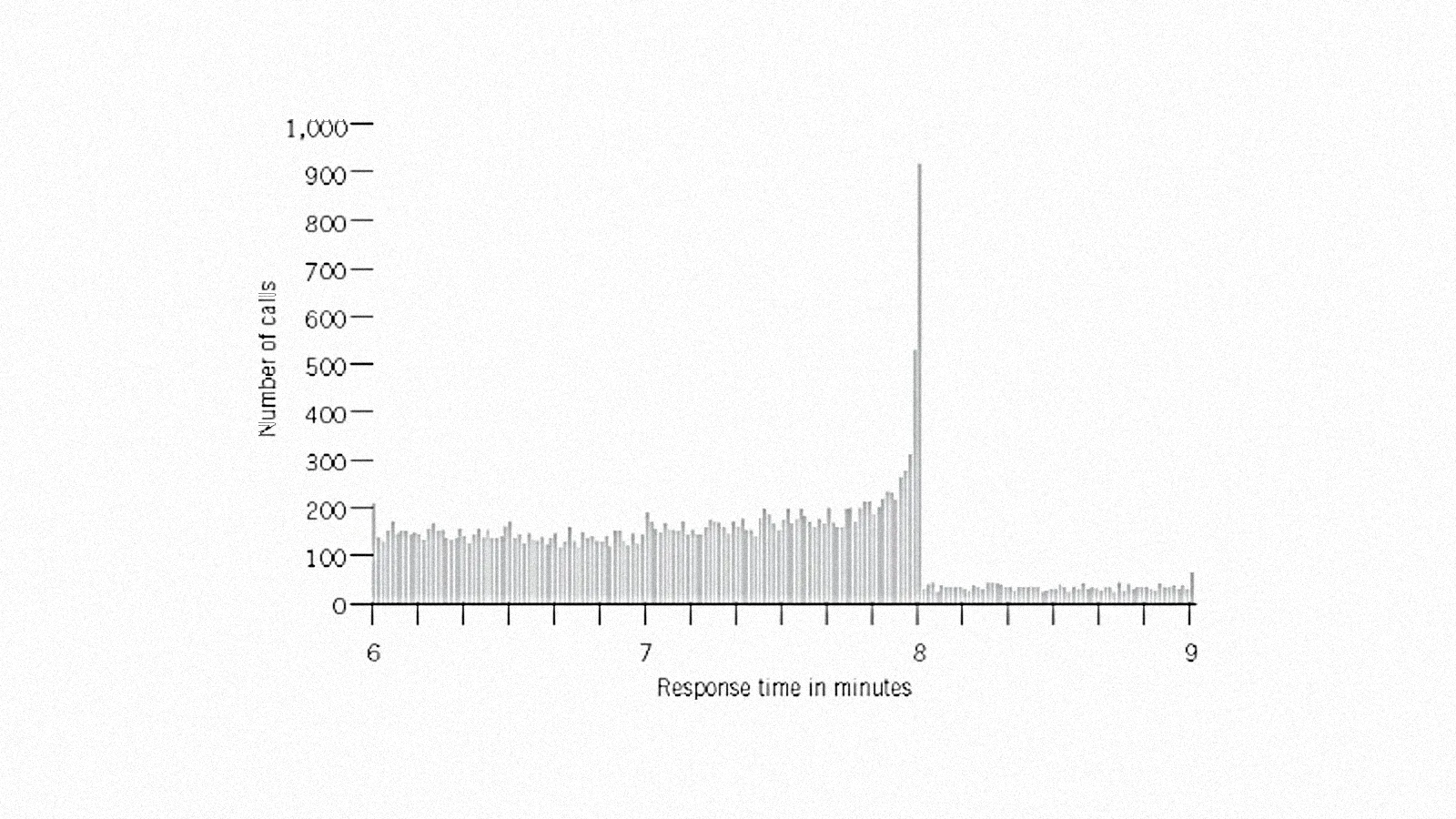
In the UK, a national performance standard introduced in the 1970s required emergency ambulances to reach the most serious calls within eight minutes. The target looked like it promoted better care. Because performance evaluations, funding, and incentives were all tied to it, crews and dispatchers learned to optimize for the rule itself. Reported response times clustered implausibly around eight minutes. Measurement had become part of the system being optimized. The rule reshaped behaviour, and the behaviour reshaped the data (Blastland & Dilnot, The Tiger That Isn't, 2007). The point isn't that the British ambulance service is uniquely bad at metrics. The same dynamic shows up wherever an institution, public or private, tries to govern a complex environment by tightening a single number.
Openness
Complex systems exchange information, energy, and resources with their environment. Their boundaries aren't fixed lines but ongoing achievements.
A system maintains its identity through internal processes while depending entirely on its environment to survive. A cell isn't defined by a rigid wall. It's defined by a membrane that selectively interacts with what surrounds it. The boundary exists because exchange never stops.
An organisation isn't defined by its legal entity or physical location either. It's defined by the conversations it sustains and the decisions it reproduces. Everything else is environment. As communication reacts to external events, external pressures become internal concerns. The boundary is continuously maintained through interaction.
Relationality
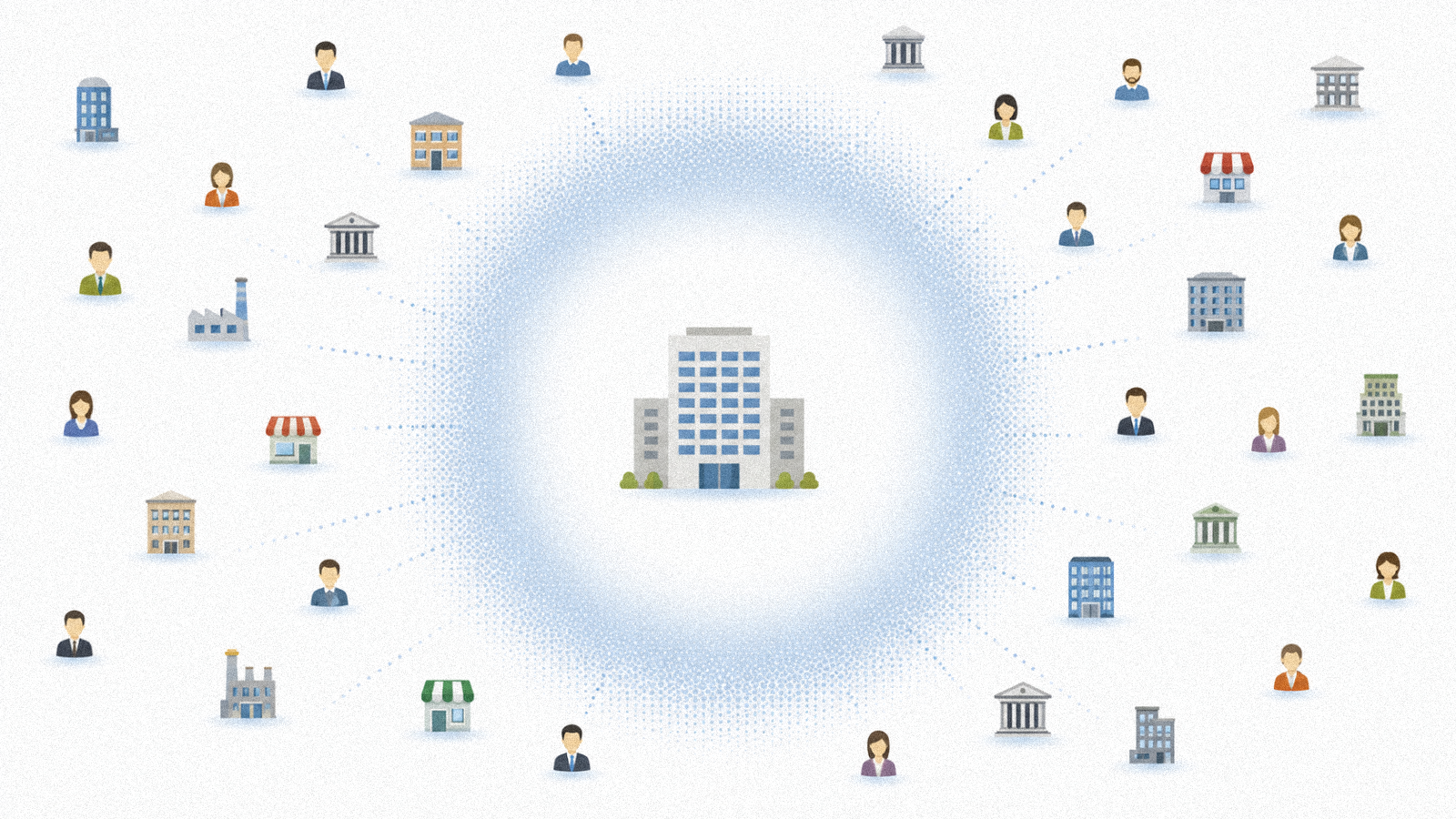
Relationships between elements matter more than the qualities of the elements themselves. How interactions occur changes the behaviour of the system in ways that can't be reduced to individual components.
In the early 1980s, a General Motors factory in Fremont, California was one of the worst-performing plants in the company's network. When Toyota wanted to manufacture cars in the US to avoid import tariffs, they reopened the same factory with GM under a joint venture called NUMMI. Toyota redesigned the production system, and along with it, the way people interacted within it. Workers were encouraged to surface problems, stop the line when defects appeared, and participate in continuous improvement. Feedback loops between workers and management were shortened and normalised. Absenteeism fell. Quality improved. The plant became one of the most efficient in the industry. The components were largely the same. What changed was the structure and quality of interaction among them (Shook, Learning to See).

Conway's Law makes the same point in software. The structure of a system tends to mirror the communication patterns of the organisation that builds it. Teams that work closely together produce tightly integrated components. Teams that rarely interact produce fragmented architectures. The people and the technical goals can stay constant. The systems that come out the other end will differ depending on how coordination flows.
Complexity Management
Complexity is ontological. It exists independently of us. Systems, by contrast, are epistemological. They're ways of seeing, grouping, and interpreting the world. We draw a conceptual boundary to make relationships visible, but the boundary is ours, not nature's.
Managing complexity starts with admitting we can't control it the way we control ordered systems. We can't impose linearity on environments that are non-linear, adaptive, or uncertain. What we can do is choose an appropriate way of thinking about the situation in front of us.
Systems Thinking
Search for systems thinking and one of the first things you'll see is the iceberg model. But it was never intended to represent the field. Peter Senge popularised it in the 1990s as a teaching device to show that visible events emerge from deeper patterns and structures. The trouble starts when the iceberg is treated as a practical cognitive tool. It implicitly assumes we can step back from events, identify the right level of abstraction, and select the appropriate mental model at will.
Cognitive science suggests otherwise. Daniel Kahneman won the Nobel Prize in 2002 for showing that human reasoning is shaped by heuristics, biases, emotion, and context. The mind isn't a computer that picks the right mental model when needed. Our judgments arise from how situations are framed and experienced in the moment. Knowing that deeper structures exist doesn't guarantee we'll reason or act systemically when it matters.
Systems thinking is broader than any single model. One of the more comprehensive overviews is Mike Jackson's Critical Systems Thinking and the Management of Complexity, which describes several distinct systemic worldviews, each useful for different kinds of problems:
- A mechanical perspective treats systems as machines composed of stable parts with predictable behaviour. This works when goals are clear and cause-and-effect is reliable. Systems engineering operates here.
- An interrelationships perspective shifts attention from components to feedback loops. Behaviour emerges over time. System dynamics belongs in this view, useful for exploring how patterns evolve rather than optimising individual parts.
- An organismic perspective treats systems as living entities that must adapt to survive. The focus is on viability, regulation, and the balance between autonomy and control. Stafford Beer's Viable System Model exemplifies it.
- A purposeful perspective sees systems as collections of agents who interpret situations differently and act based on their own intentions. Problems aren't purely technical but shaped by meaning and perception. Soft Systems Methodology reflects this view, emphasising learning, dialogue, and accommodation rather than optimisation.
- A societal or environmental perspective situates systems within broader social, political, and ecological contexts. Power, legitimacy, and boundary judgments become central. Critical Systems Heuristics operates in this space, asking explicitly whose interests are served and whose voices are excluded.
Each worldview highlights certain aspects and obscures others. Managing complexity requires the capacity to shift perspectives as the situation demands. Combining them isn't hypocrisy or indecisiveness. It's the only honest move.
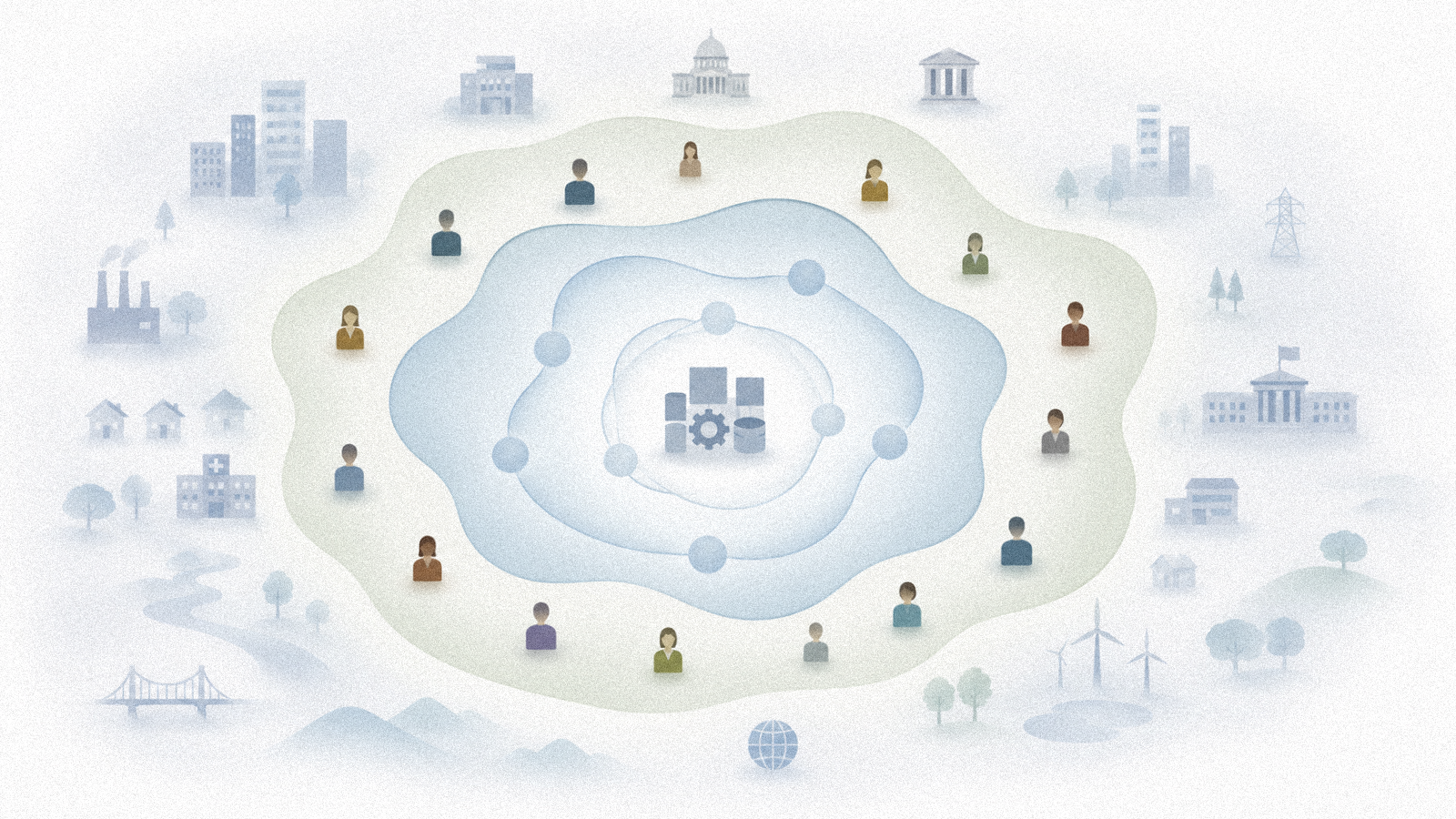
I learned this the hard way. About twelve years ago, I tried applying hard systems thinking to organisational design. Creating user flows, process diagrams, and use cases worked beautifully in software development, where processes and dependencies can be precisely defined. I assumed the same precision would work for people. I drew diagrams. I mapped processes. I defined roles and responsibilities. On paper, everything looked coherent. In practice, it collapsed almost immediately. People resisted the process. They found shortcuts. They ignored steps. They misinterpreted instructions. They used their agency to reshape the system into something that made sense to them. Humans don't behave like components in a machine. You can't diagram your way into predictable organisational behaviour.
Complexity Science
For most of modern history, the natural and social sciences ran on separate tracks. Narrowing the scope of inquiry reduced cognitive load, allowed researchers to focus, and produced advances within disciplines. Physics, biology, economics, and sociology each refined their own methods, languages, and standards of rigour. The separation was never ontological. The world was never divided into disciplinary silos.
Complexity science emerged from the observation that many systems, natural or social, share patterns of behaviour that no single discipline can fully account for. There's no official definition. It isn't a formal field with fixed boundaries, but an inquiry into complex systems. It draws on physics, biology, computer science, economics, and sociology, and applies the ideas wherever similar dynamics appear. Network theory studies communication protocols in computer science and social ties in sociology. Models of adaptation and emergence from biology now inform the study of organisations and markets.
Humberto Maturana and Francisco Varela worked at the intersection of biology, cognition, and philosophy. Drawing on systems biology and cybernetics, they asked what distinguishes living systems from non-living ones. Their answer was autopoiesis. Living systems are self-producing networks that continuously regenerate the components and relationships that constitute them. The idea later expanded into their work on embodied cognition, where cognition isn't abstract information processing but something that arises through the interaction between an organism, its body, and its environment.
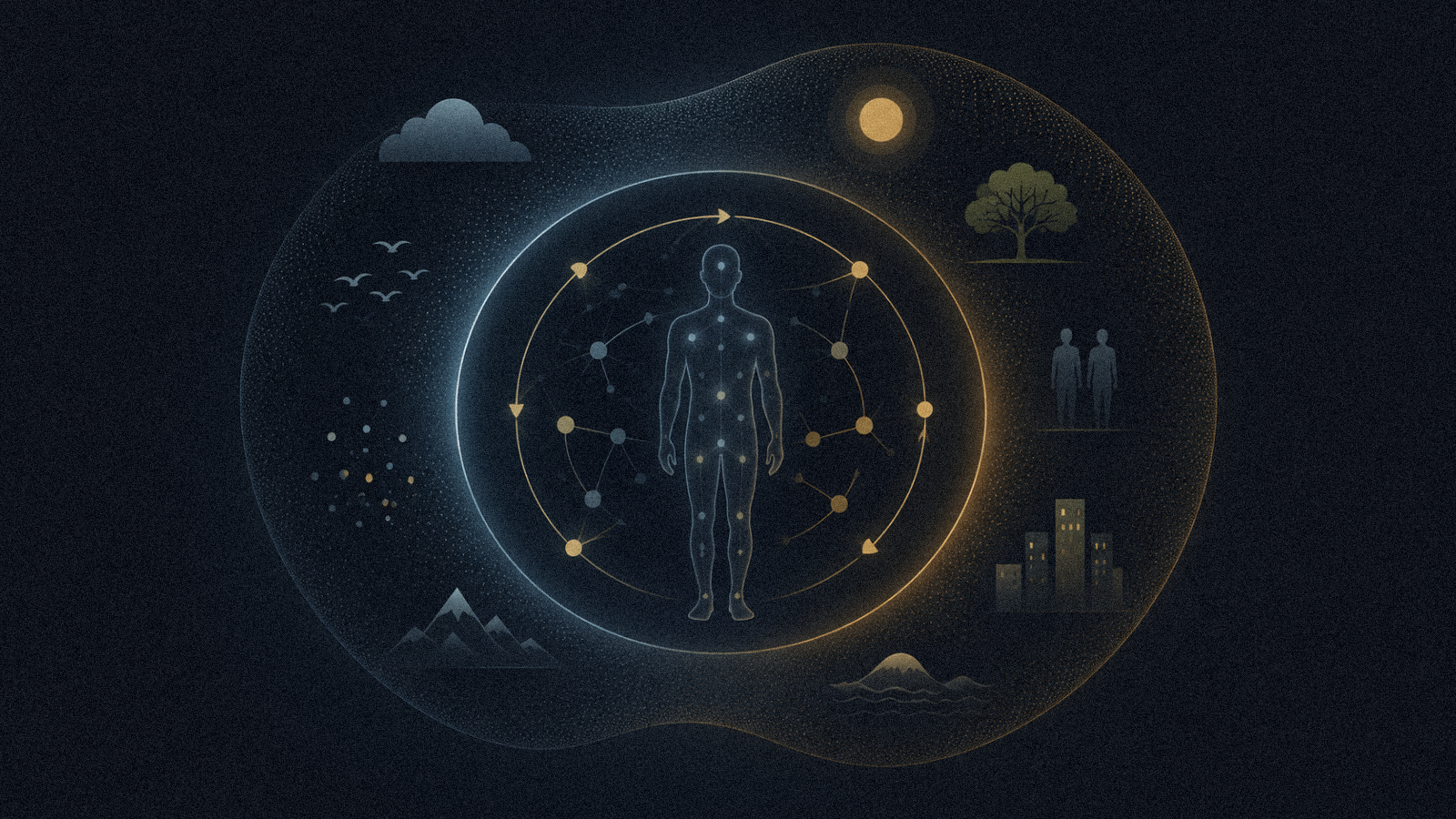
Niklas Luhmann took autopoiesis and built a radically different theory of social systems on it. Social systems, in his account, aren't constituted by individuals. They're constituted by communication. Organisations, teams, and institutions persist by reproducing decisions, meanings, and expectations through ongoing communication. Once I read Luhmann, my focus when joining new organisations shifted. I stopped starting with process diagrams. I started with shared language, common metaphors, and simple taxonomies people could actually use. Facilitating communication became a prerequisite for shared understanding. Only then did groups of individuals begin to function as self-organising teams capable of pulling together in the same direction.
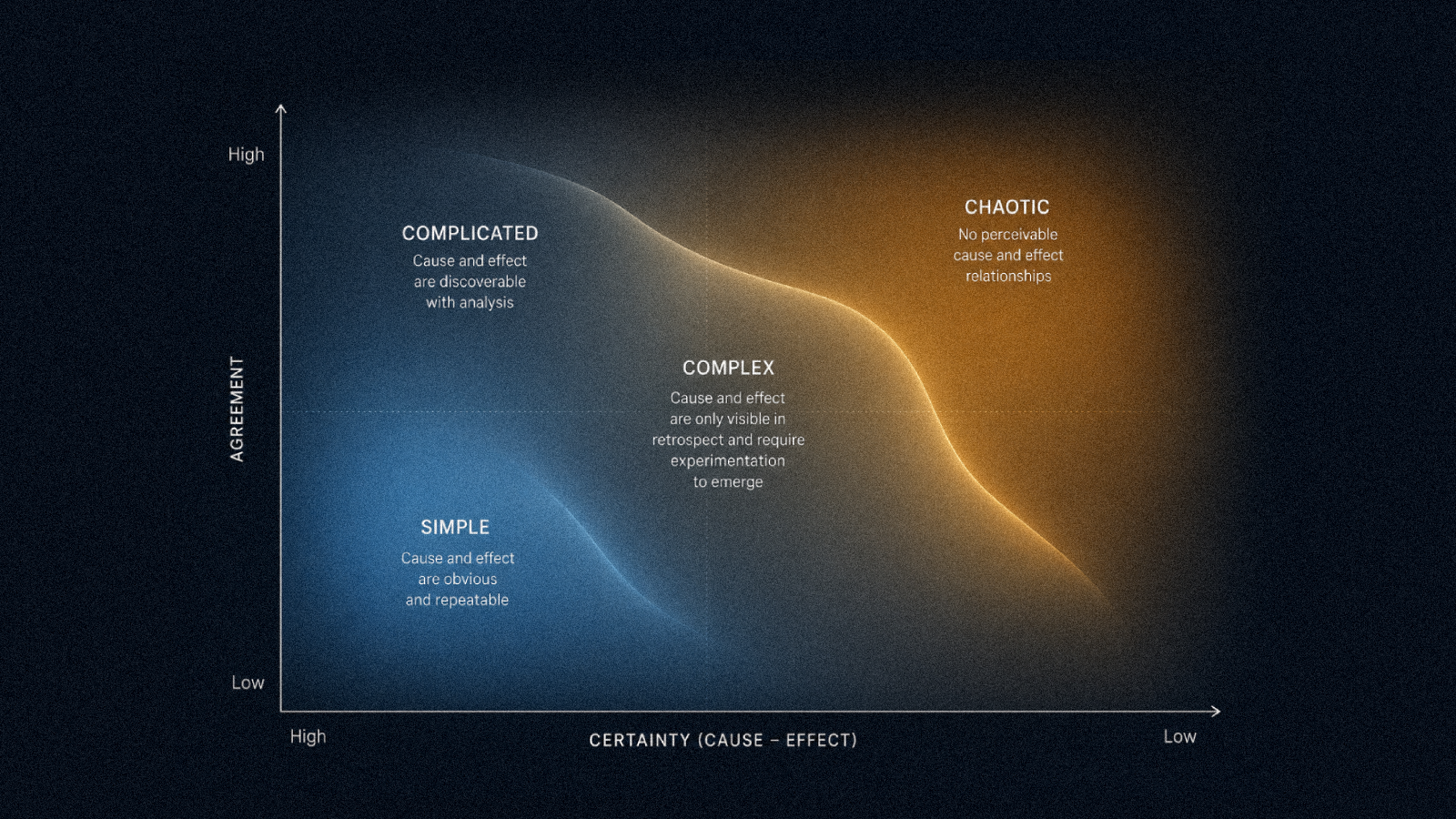
Ralph Stacey applied complexity ideas to organisations and management. He's best known for the Stacey Matrix, which mapped how different levels of certainty and agreement shape the kinds of managerial approaches that are possible. The matrix made clear that traditional planning and control methods break down as situations move away from stability and consensus. In his later work, Stacey moved past decision frameworks altogether. Organisations aren't systems that managers stand outside of and manipulate. They're ongoing processes of interaction, conversation, and meaning-making. Managers and teams participate together in the continuous co-creation of meaning through everyday actions. From this perspective, leadership is less about directing outcomes and more about enabling conditions for learning, coordination, and productive interaction. The same shift later resurfaced in practice through ideas like servant leadership.
Paul Cilliers focused on what it means to intervene in complex systems. He emphasised that complex systems must operate far from equilibrium to adapt and evolve. Stability feels efficient and safe. It also reduces a system's capacity to respond to change. Applied to organisations, this means that periods of tension, ambiguity, and even inefficiency aren't signs of failure. They're conditions for learning. Attempts to optimise away uncertainty or enforce permanent stability tend to strip organisations of the very flexibility they need to survive. Leadership, from this perspective, isn't about restoring balance. It's about holding systems in a productive state of imbalance where new patterns can emerge.
Alicia Juarrero examined how constraint operates in complex systems. Rather than treating constraints as purely limiting, she distinguished between restrictive constraints, which suppress variation and narrow possible actions, and enabling constraints, which shape the space of possibilities in which coordinated behaviour can emerge. This reframes constraint from a mechanism of control into a condition for coordinated action. Language, social norms, and organisational rules all function this way. They limit what can be done while making meaningful action, cooperation, and innovation possible. The implication for organisations is that the goal isn't to eliminate freedom through rigid rules, nor to remove structure entirely, but to design constraints that support learning and adaptation. Pile too many rigid constraints onto a complex system, and you don't get more control. You get gaming, brittleness, and the kind of pattern the ambulance target produced. Effective leadership cultivates the conditions under which productive behaviour can emerge (Juarrero, Dynamics in Action, 1999).
Dave Snowden developed Cynefin as a way of making sense of different kinds of situations before deciding how to act. It's not a process or a decision tree. It's an orientation tool that helps distinguish between contexts that look similar on the surface but behave very differently in practice. Cynefin describes several domains based on the nature of cause and effect:
- In clear situations, cause and effect are obvious and repeatable, and the correct response is generally known.
- In complicated situations, cause and effect aren't immediately obvious but can be discovered through expert analysis.
- In complex situations, cause and effect can't be determined in advance and only become clear in retrospect.
- In chaotic situations, no meaningful relationship between cause and effect exists, and immediate action is required to restore stability.
- At the centre lies confusion, where the nature of the situation itself is misunderstood or contested.

Cynefin earned its place in my work not because I needed to apply it in every planning session. It earned its place because it gave teams a shared vocabulary, what Snowden calls descriptive self-awareness. It named patterns I had been struggling to articulate. Once teams could distinguish between ordered, complicated, complex, and chaotic situations, conversations about uncertainty, emergence, and risk became clearer. Shared language supported shared understanding. Shared understanding made coordinated action possible without pretending that certainty was available.
Conclusion
Sometimes you can do everything right, balance theory and practice, experiment, adapt, and still fail. That's the nature of complexity. Outcomes emerge from interactions and circumstances, which means failure is often less a reflection of individual quality or character than of the system in which action unfolded.
This cuts against a story most of us have absorbed without noticing. The dominant narrative of the last forty years treats success as virtue and failure as moral verdict. The successful person was disciplined, made the right choices, took responsibility. The unsuccessful one didn't. Complexity doesn't deny that effort and judgment matter, but it refuses to grant them the leading role. People who made identical decisions can land in opposite outcomes because the systems they were embedded in moved differently. Reading every failure as a character flaw is a misreading of how the world actually produces outcomes.
There's no recipe for managing complexity. What understanding complexity offers is a more accurate set of expectations. Unpredictability, ambiguity, and uncertainty aren't failures of planning. They're normal features of the world we operate in. They can be navigated. They can't be organised into neat rows of a spreadsheet. As the saying goes, it's what you know for sure that kills you. Certainty creates blindness, and complexity punishes blindness.
Progress in complex environments comes less from explanation and debate, and more from interaction with reality. Small experiments reveal more about a system than grand plans or abstract arguments. Local, safe-to-fail probes show how things actually behave, not how we hope they'll behave. The cost of being wrong stays small, and the chance of learning something useful before consequences scale stays high.
This is also why the most effective path to a goal often isn't the direct one. John Kay called this obliquity. Companies that pursue profit single-mindedly tend to make less of it than companies obsessed with their craft, their customers, or their product. People who aim straight at happiness rarely hit it. In complex domains, the obvious, head-on approach mistakes the system for a machine that responds proportionally to input. Indirect routes, ones that respect the entanglement and let the goal emerge from the work, often outperform the strategy that names the goal and marches at it.
Working with complexity also means abandoning the search for a single, correct perspective. Using multiple approaches isn't indecision. Complex systems can't be understood from one angle alone. What matters isn't ideological purity but the ability to look at the system from several vantage points and make sense of the patterns that emerge.
In practice, this often means breaking big ideas, initiatives, and problems into smaller, bounded pieces. Instead of releasing software every six months, release every few weeks. Instead of coordinating dozens of people around a single, sprawling effort, form small teams with clear boundaries and shared understanding. Rather than attempting to deliver a grand vision in one move, let direction emerge through focused work and feedback. In complex systems, progress is rarely the result of control, instead it's the result of learning and self-awareness.